
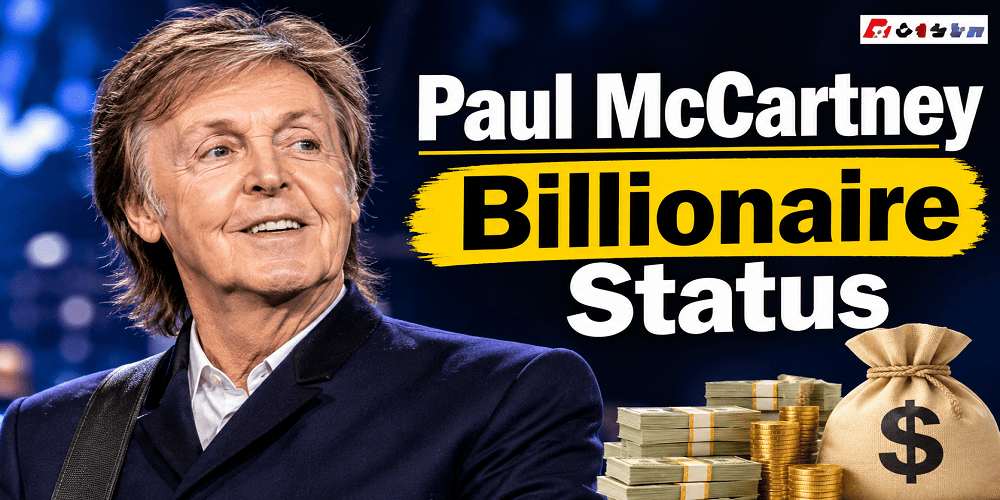
Paul McCartney has achieved another historic milestone beyond his extraordinary music career. The legendary musician, songwriter, and former member of The Beatles is now officially recognised as a billionaire, with an estimated fortune of $1.4 billion, according to Forbes' latest report published on November 9, 2026.
The news has attracted worldwide attention because McCartney is not only one of the most successful musicians in history but also one of the wealthiest people in the global entertainment industry. His financial success comes from decades of songwriting, music publishing, record sales, concert tours, royalties, investments, and valuable business assets.
The story behind the Paul McCartney billionaire status is particularly interesting because his fortune did not come from music performances alone. Instead, he built a long-term financial empire by protecting music rights, investing in publishing catalogues, and maintaining control over valuable creative assets.
From his early days in Liverpool to becoming one of the richest musicians in the world, McCartney's journey demonstrates how musical creativity and smart business decisions can create extraordinary wealth.
In this article, we explore Paul McCartney's billionaire status, estimated net worth, major income sources, business ventures, music royalties, and the financial decisions that helped him reach the billion-dollar milestone.
Paul McCartney Billionaire Status: Is He Officially a Billionaire?
Yes. Paul McCartney has officially entered the billionaire category, according to Forbes' November 9, 2026 report.
Forbes estimates that the legendary musician has accumulated a personal fortune of approximately $1.4 billion, equivalent to around £1.04 billion. This achievement makes him the world's third-richest musician, behind Jay-Z and Taylor Swift.
McCartney's billionaire milestone is especially significant because he is among the very few musicians who have built such substantial wealth primarily through music, publishing rights, touring, and long-term investments.
His financial journey began during the 1960s when The Beatles became one of the most influential musical groups in history. However, the band members initially earned much less from their recordings than many fans might expect.
Over the following decades, McCartney gradually developed independent business interests and strengthened his ownership of music-related assets.
His publishing company, MPL Communications, became one of the most important parts of his financial empire. It owns rights connected to thousands of musical compositions, including works by other well-known artists.
The latest Forbes estimate reflects the combined value of these assets, his music royalties, touring income, property investments, and other valuable holdings.
It is important to understand that celebrity net worth figures are estimates rather than publicly audited personal bank balances. Nevertheless, Forbes' latest assessment provides strong recognition of McCartney's billionaire status.
How Did Paul McCartney Build His Billion-Dollar Fortune?
Paul McCartney did not become a billionaire overnight. His wealth developed over more than six decades through several income streams.
While his success with The Beatles established his international reputation, his financial achievements continued long after the group separated in 1970.
Here are the major factors behind his impressive fortune.
1. The Beatles Created the Foundation of His Wealth
'Please, Please Me' by The Beatles Was a #1 Hit 50 Years Ago Today - Parade
The Beatles played a major role in establishing Paul McCartney's financial success.
Formed in Liverpool in the early 1960s, the group became one of the biggest musical acts worldwide. Their popularity transformed the global music industry and created enormous commercial opportunities.
McCartney worked alongside John Lennon, George Harrison, and Ringo Starr to produce some of the most successful songs and albums in music history.
Popular Beatles songs include:
- Hey Jude
- Let It Be
- Yesterday
- Come Together
- Blackbird
- Eleanor Rigby
- All You Need Is Love
These songs continue to generate revenue through streaming platforms, radio broadcasts, licensing agreements, physical music sales, and commercial performances.
Although the Beatles initially had complicated recording and publishing arrangements, their music eventually became an extremely valuable commercial asset.
McCartney's songwriting contributions and his share of the group's financial interests continue to support his wealth.
The Beatles' music remains popular with multiple generations, meaning their catalogue can generate income decades after its original release.
2. MPL Communications Became His Financial Empire
Del entretenimiento a los negocios, las celebridades que brillan en el empresariado
larepublica.co
One of the most important reasons behind the Paul McCartney billionaire status is his publishing business.
McCartney established MPL Communications in 1969, shortly before The Beatles officially separated.
The company allowed him to develop greater independence over his musical publishing activities and build a valuable portfolio of copyrights.
Over the years, MPL expanded beyond McCartney's own musical compositions. It acquired publishing rights connected to several famous artists and musical works.
Its catalogue includes songs associated with Buddy Holly, as well as popular Christmas music and Broadway compositions.
The company also owns rights connected to the musical Grease.
Music publishing is an important business because copyrighted songs can generate income whenever they are used commercially under applicable licensing arrangements.
For example, a song may generate revenue when it is:
- Streamed on digital music platforms.
- Played on radio stations.
- Used in films and television programmes.
- Performed at concerts and live events.
- Included in advertisements.
- Licensed for theatrical productions.
These different revenue opportunities make music publishing a valuable long-term investment.
According to Forbes, MPL is worth at least $250 million and represents one of the largest parts of McCartney's business empire.
3. Music Royalties Continue to Generate Millions
Another major contributor to McCartney's wealth is music royalties.
Unlike many businesses that depend on regular product sales, successful music catalogues can continue producing income for decades.
McCartney has written and performed hundreds of songs throughout his career. Many remain commercially popular and are regularly played around the world.
His Beatles songwriting catalogue is particularly valuable.
Forbes estimates that his share of Beatles songwriting copyrights generates at least $10 million annually and has a value of approximately $200 million.
His publishing interests also extend to compositions written by other musicians.
This means his earnings are not limited to songs he personally recorded or performed.
The continued popularity of classic music creates a financial advantage because new audiences discover these songs through streaming services, films, social media, and television.
For McCartney, royalties represent an important source of recurring income that supports his overall billionaire fortune.
4. Successful Concert Tours Increased His Wealth
Paul McCartney 'Got Back' Tour 2022 To Play Dickies Arena In Fort Worth - CBS Texas
Live performances have also played an important role in McCartney's financial success.
Even after achieving international fame with The Beatles, he continued performing for audiences across different countries.
After the band's separation, he formed Wings with his wife Linda McCartney and musician Denny Laine.
Wings produced several successful albums and songs, including Band on the Run, Live and Let Die, and Jet.
McCartney later continued his solo career and performed numerous international tours.
One of his notable recent projects was the Got Back Tour, which ran between 2022 and 2025.
According to Forbes, the tour included 79 performances during that period.
Large international concerts generate revenue through ticket sales, VIP packages, merchandise, and other commercial arrangements.
Although touring involves substantial expenses, successful performances can contribute significantly to an artist's overall earnings.
McCartney's ability to continue attracting large audiences has helped him maintain his position among the world's richest musicians.
5. The Beatles' Music Catalogue Remains Extremely Valuable
The Beatles' catalogue is another important element of McCartney's financial success.
The group's music continues to attract listeners across different age groups and countries.
Digital streaming has created new opportunities for classic recordings to reach younger audiences.
Songs that were originally released decades ago can now generate income through online platforms and licensing agreements.
The Beatles' commercial popularity also extends beyond music.
Their brand generates revenue through:
- Official merchandise.
- Music documentaries.
- Film and television projects.
- Collectibles.
- Vinyl and CD releases.
- Special music editions.
- Commercial licensing.
Apple Corps, the company associated with The Beatles, also generates revenue from the group's commercial activities.
Forbes estimates that McCartney receives a 25% share of Apple Corps' annual earnings, contributing another important income stream to his fortune.
This demonstrates how the band's legacy continues to produce financial value long after its original members became international superstars.
Other Sources of Income Behind Paul McCartney's Wealth
Apart from music publishing and concert performances, McCartney has several other assets that contribute to his overall financial position.
6. Real Estate Investments
Paul McCartney's House in Sussex
Real estate is another important part of McCartney's financial portfolio.
Over the years, he has owned and invested in properties in the United Kingdom and the United States.
His property interests include countryside estates, luxury residences, and other valuable real estate holdings.
McCartney and his wife, Nancy Shevell, have also been associated with a large farm near Rye in East Sussex.
Property investments can provide long-term financial value through appreciation, rental opportunities, and ownership of desirable locations.
Although the exact value of his complete property portfolio is not publicly confirmed, real estate contributes to the overall assessment of his billionaire fortune.
His wealth is therefore not dependent on music earnings alone. It also includes physical assets that can retain substantial value over time.
7. Art Collection and Valuable Personal Assets
McCartney is also known for his interest in art and collecting valuable items.
His collection includes works associated with internationally recognised artists such as Pablo Picasso and René Magritte.
Fine art can be an important asset for wealthy individuals because rare and historically significant pieces may increase in value over time.
However, the actual market value of individual artworks can vary depending on authenticity, condition, provenance, and demand.
These assets form another part of the wider financial picture behind the Paul McCartney billionaire status.
His collection also reflects his long-standing connection with creative industries beyond music.
8. Merchandise and Commercial Licensing
McCartney's international popularity has created commercial opportunities beyond album sales and concerts.
Official merchandise, special releases, music-related products, and licensing arrangements help generate additional revenue.
Fans continue purchasing products connected to his solo career and The Beatles.
Merchandise can include:
- Official T-shirts and clothing.
- Limited-edition vinyl records.
- Posters and collectibles.
- Special album editions.
- Concert-related products.
- Music memorabilia.
Commercial licensing is particularly valuable because famous songs and brands can be used in different entertainment and advertising projects under authorised agreements.
These opportunities help extend the commercial life of McCartney's music and public image.
Paul McCartney Net Worth in 2026: How Rich Is He?
Sir Paul McCartney first UK billionaire musician
As of November 2026, Forbes estimates Paul McCartney's net worth at approximately $1.4 billion.
This places him among the richest musicians in the world.
His fortune is the result of several decades of professional success, music ownership, royalties, business investments, and touring revenue.
The latest estimate also represents a major milestone because he is now recognised as the world's third-richest musician.
According to Forbes, his estimated wealth places him behind:
- Jay-Z, with an estimated fortune of $2.8 billion.
- Taylor Swift, with an estimated fortune of $2 billion.
- Paul McCartney, with an estimated fortune of $1.4 billion.
These figures are estimates and can change as the value of music catalogues, investments, property, and other assets changes.
Forbes Australia+1
McCartney's position is particularly impressive because his fortune has been built primarily through a lifetime of creative work and music-related business ownership.
Why Did Paul McCartney Become a Billionaire So Late in His Career?
Many people may wonder why McCartney reached billionaire status after spending more than six decades in the music industry.
The answer involves several financial developments that took place over many years.
During the early Beatles era, the group did not receive the same financial benefits from its recordings that modern superstar musicians might expect.
Publishing agreements and recording contracts determined how much money artists could earn from their work.
McCartney gradually developed a different approach by establishing his own publishing business and investing in music copyrights.
Instead of relying entirely on payments from record companies, he built a portfolio of intellectual property.
The value of this strategy increased as music consumption changed.
In earlier decades, music revenue depended heavily on physical record sales, radio, and live performances. Today, streaming services, digital licensing, films, television, and international distribution provide additional ways to earn money from music.
The increasing commercial value of music publishing has also helped established catalogues become attractive financial assets.
McCartney benefited from holding valuable rights and maintaining a long-term presence in the industry.
His wealth demonstrates that successful artists can create financial security by combining creative talent with ownership and business planning.
Paul McCartney's Business Strategy: What Makes His Wealth Different?
The Paul McCartney billionaire status is not simply the result of being a famous singer.
His financial strategy includes several important decisions that helped him build wealth over time.
Ownership of intellectual property: Music copyrights can generate income long after a song is released. McCartney's publishing interests provide access to recurring royalty opportunities.
Diversification: His income comes from multiple areas, including music publishing, touring, royalties, property, merchandise, and other investments.
Long-term thinking: Rather than focusing only on immediate earnings, he invested in assets that could continue producing revenue for many years.
Global recognition: The Beatles remain one of the most recognised music brands in history. Their international popularity supports demand for music, merchandise, and licensing.
Independent business development: MPL Communications allowed McCartney to develop a significant publishing business outside his own recording career.
These decisions helped him turn musical success into a diversified financial empire.
How Paul McCartney Compares With Other Billionaire Musicians
The music industry has produced several wealthy artists, but only a small number have reached billionaire status.
Jay-Z has built his fortune through music, business investments, entertainment ventures, and ownership interests in different companies.
Taylor Swift has developed significant wealth through music sales, touring, songwriting, and ownership of valuable creative assets.
Paul McCartney's financial journey is different because much of his wealth comes from a music publishing portfolio developed over several decades.
His business interests extend beyond the Beatles catalogue and include copyrights associated with other musicians and musical productions.
This gives him a distinctive position in the entertainment industry.
His achievement also demonstrates that artists can build enormous fortunes without relying exclusively on modern social media popularity, brand partnerships, or technology companies.
Instead, long-term ownership of creative work can become an extremely valuable financial asset.
Forbes Australia+1
What Does Paul McCartney's Billionaire Status Mean for His Legacy?
Paul McCartney's financial achievements add another chapter to an already extraordinary career.
He has influenced generations of musicians, contributed to the development of modern popular music, and helped create some of the most recognisable songs in history.
His success with The Beatles changed the music industry, while his work with Wings and as a solo artist established his reputation as a versatile musician.
However, his billionaire milestone represents more than financial success.
It highlights the importance of protecting creative rights and understanding the business opportunities behind artistic work.
Many musicians earn substantial amounts through performances and recordings, but McCartney's approach demonstrates the potential value of owning publishing rights and building a business around intellectual property.
His story may also inspire younger musicians to understand contracts, royalties, copyright ownership, and the long-term financial value of their creative work.
At 84, McCartney's legacy continues to grow through his music and business interests.
His achievement is a reminder that a successful creative career can create opportunities that last for generations.
Paul McCartney Becomes One of the Richest Musicians in the World
McCartney's billionaire milestone is also significant for British music.
In 2024, he became the first British musician to reach billionaire status according to the Sunday Times Rich List. At that time, his combined fortune with his wife, Nancy Shevell, was estimated at £1 billion.
The 2026 Forbes assessment takes his estimated personal fortune to approximately $1.4 billion.
His financial growth reflects the continuing commercial value of his music catalogue, publishing interests, and international business activities.
The achievement also places him in an exclusive group of musicians whose financial success extends far beyond traditional entertainment earnings.
For McCartney, the journey from a young musician in Liverpool to a billionaire business figure represents decades of hard work, creativity, and strategic financial decisions.
AP News+1
Final Thoughts on Paul McCartney Billionaire Status
The Paul McCartney billionaire status marks an important achievement in the history of the global music industry. With an estimated fortune of $1.4 billion in November 2026, he has become one of the wealthiest musicians worldwide.
His financial success comes from much more than his performances with The Beatles. Music publishing, songwriting royalties, concert tours, commercial licensing, property investments, and other valuable assets have all contributed to his fortune.
One of the biggest lessons from his journey is the importance of owning creative rights. His decision to establish MPL Communications and develop a valuable music publishing portfolio helped transform his artistic achievements into a long-term financial empire.
Even after more than six decades in the entertainment industry, McCartney's music continues to attract audiences around the world.
His billionaire milestone is not only a personal financial achievement but also an example of how creativity, ownership, and long-term business decisions can work together to build extraordinary wealth.
Frequently Asked Questions (FAQs)
1. Is Paul McCartney officially a billionaire in 2026?
Yes. According to Forbes' report published on November 9, 2026, Paul McCartney has an estimated net worth of $1.4 billion. This makes him one of the richest musicians in the world and the third-wealthiest musician globally.
2. What is Paul McCartney's net worth in 2026?
Paul McCartney's estimated net worth is approximately $1.4 billion as of November 2026. His fortune comes from music publishing, songwriting royalties, concert tours, Beatles-related earnings, property investments, and other business assets.
3. How did Paul McCartney make his money?
McCartney built his wealth through several income sources. His successful career with The Beatles provided the foundation, while his solo music, Wings, MPL Communications, publishing copyrights, concert tours, and commercial licensing helped expand his fortune.
4. Who is richer, Paul McCartney or Taylor Swift?
According to the Forbes estimates reported on November 9, 2026, Taylor Swift has an estimated fortune of $2 billion, while Paul McCartney has approximately $1.4 billion. Therefore, Swift is currently estimated to be wealthier than McCartney.
5. What is MPL Communications, and why is it important to Paul McCartney's wealth?
MPL Communications is Paul McCartney's music publishing company, established in 1969. It owns publishing rights to thousands of musical compositions, including works associated with Buddy Holly and popular Broadway productions. The company is a major contributor to his long-term financial success.
Leave A Comment
0 Comment